HBPSP

What Are Gallstones? Causes, Types & How They Form

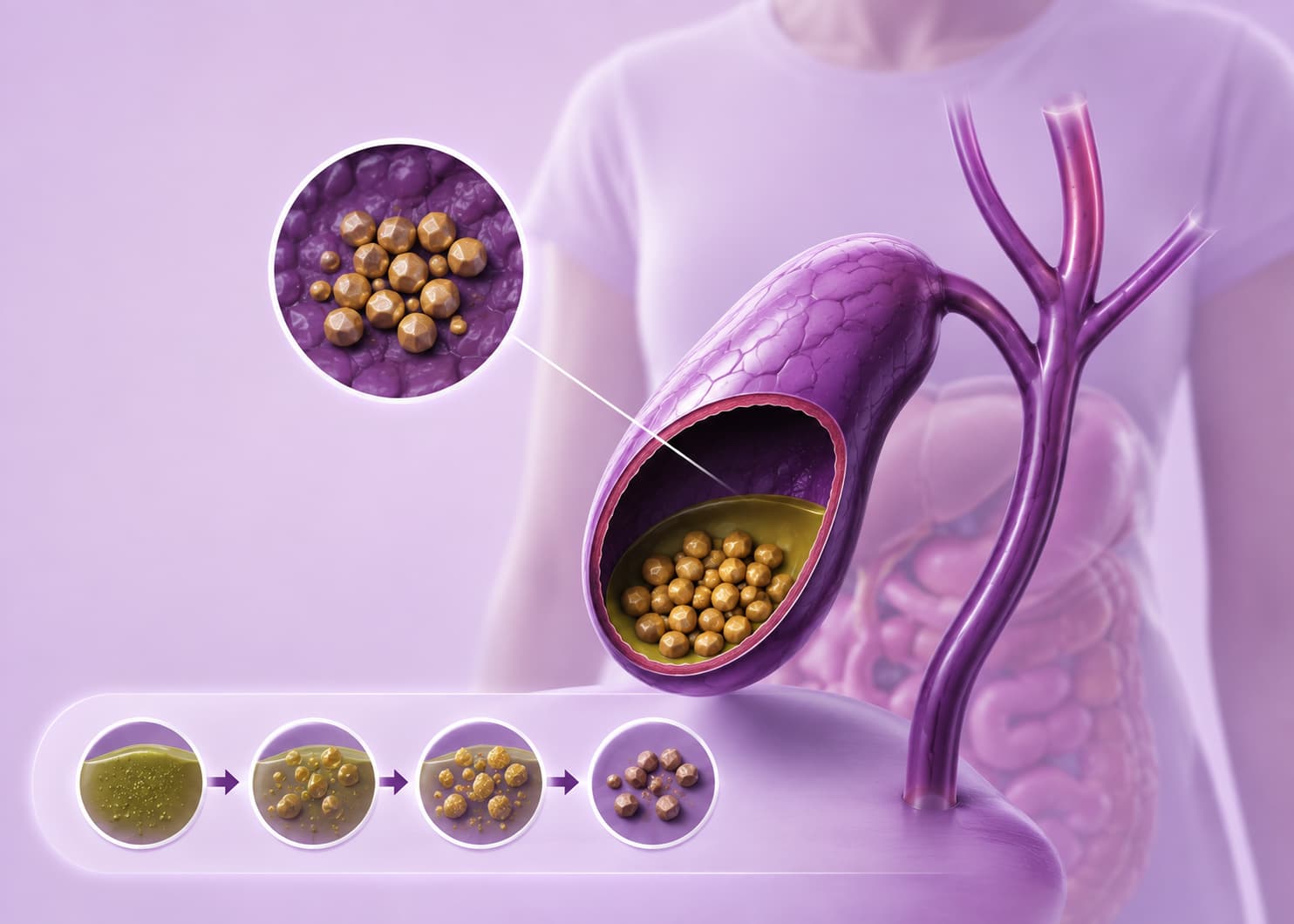
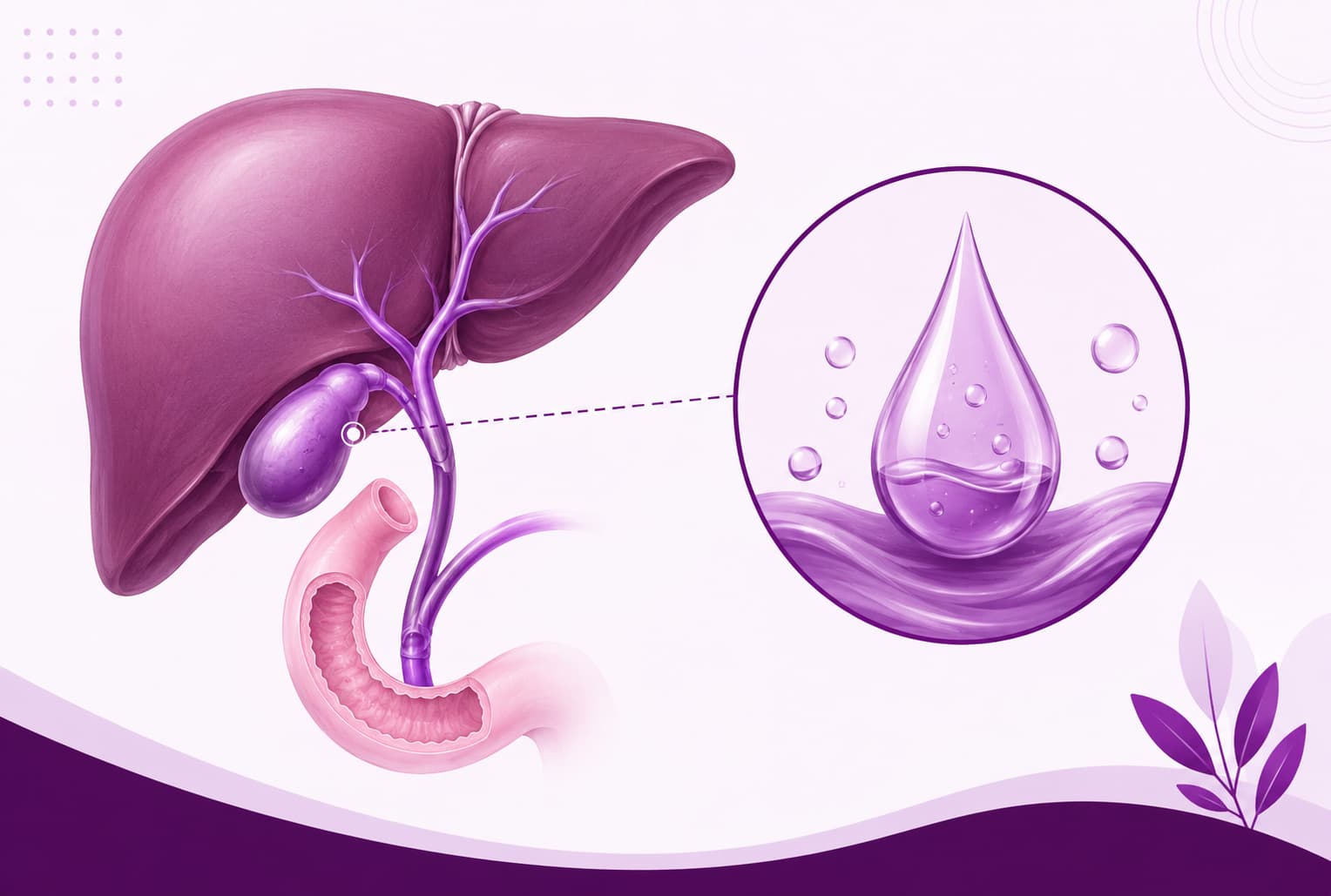
What are gallstones? Gallstones are small, hard deposits that form in the gallbladder due to an imbalance in the components of bile, such as cholesterol and bilirubin. They usually form within the gallbladder. Bile also helps eliminate waste products, such as which is a small sac located under the liver responsible for storing bile. The liver produces the bile and sends it to the gallbladder for storage. The gallbladder then releases bile into the small intestine to help digest fats when necessary. The bile may become over-concentrated or contain excessive amounts of cholesterol or bilirubin, leading to the formation of gallstones. They are first in the form of crystals can gradually combine and grow larger over time in the form of the gallstones.

Some people develop a single gallstone, or sometimes they are in the form of multiple gallstones ranging in size. Gallstones can remain silent for years, but they may cause symptoms or complications if they block the bile ducts or irritate the gallbladder lining.

What Are Gallstones? Causes, Types & How They Form
What is bile

What is bile?

Bile is a yellow-green digestive fluid produced by the liver and stored in the gallbladder. Its chemical composition includes water, bile salts, cholesterol, and bilirubin. Moreover, after the liver produces bile, it is transported to the gallbladder, where it is concentrated and stored until it is needed for digestion. When the person eats something, especially a meal containing fats, the gallbladder contracts and releases bile into the small intestine via the common bile duct to aid in the breakdown and absorption of dietary fats. Hence, bile helps the digestive system break down and absorb fats. It also helps eliminate waste products, such as bile salts. Normally, the different substances in bile remain dissolved, but the imbalance can cause solid particles to form, leading to gallstones.

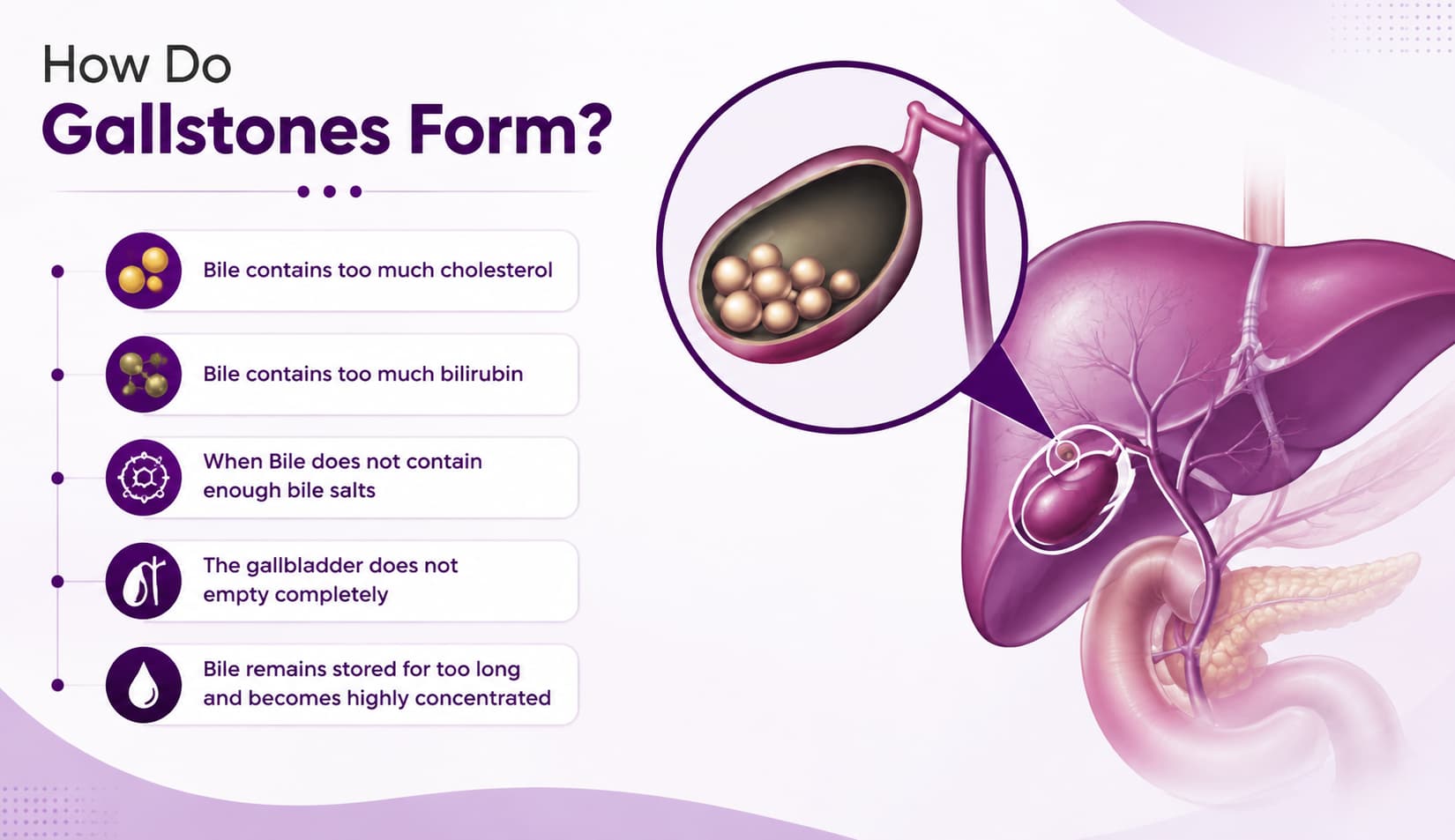
Gallstones may develop when

  • Bile contains too much cholesterol
  • Bile contains too much bilirubin
  • When Bile does not contain enough bile salts
  • The gallbladder does not empty completely
  • Bile remains stored for too long and becomes highly concentrated

Stone formation usually begins when the solution inside the bile is so concentrated that it starts making crystals of cholesterol or bilirubin. After these crystals form, they stick with each other and make the stones. Researchers understand that several contributing factors, including obesity, rapid weight loss, certain medications, and a family history of gallstones, can cause it, but the exact mechanisms are still being studied.
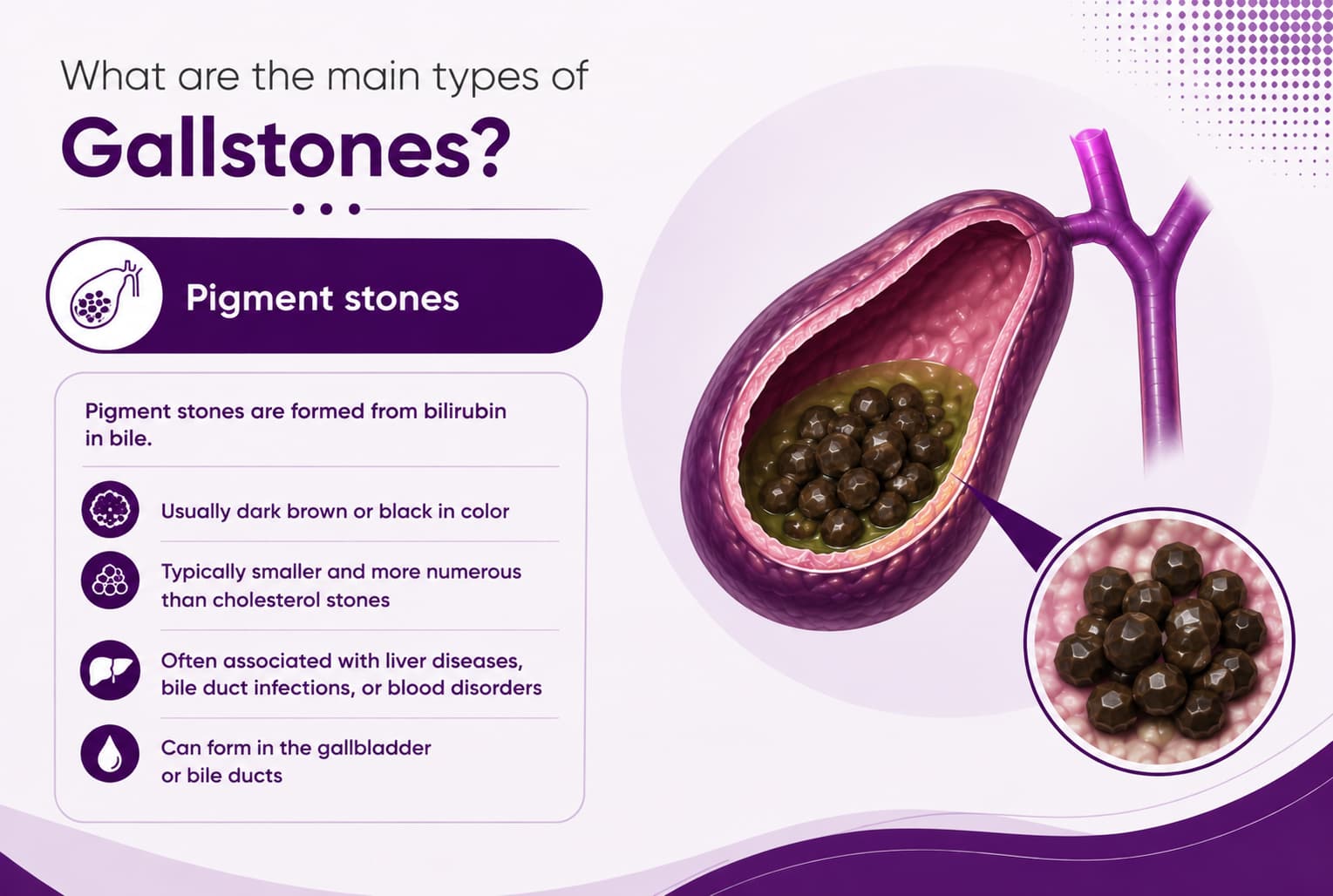
What are the main types of Gallstones?

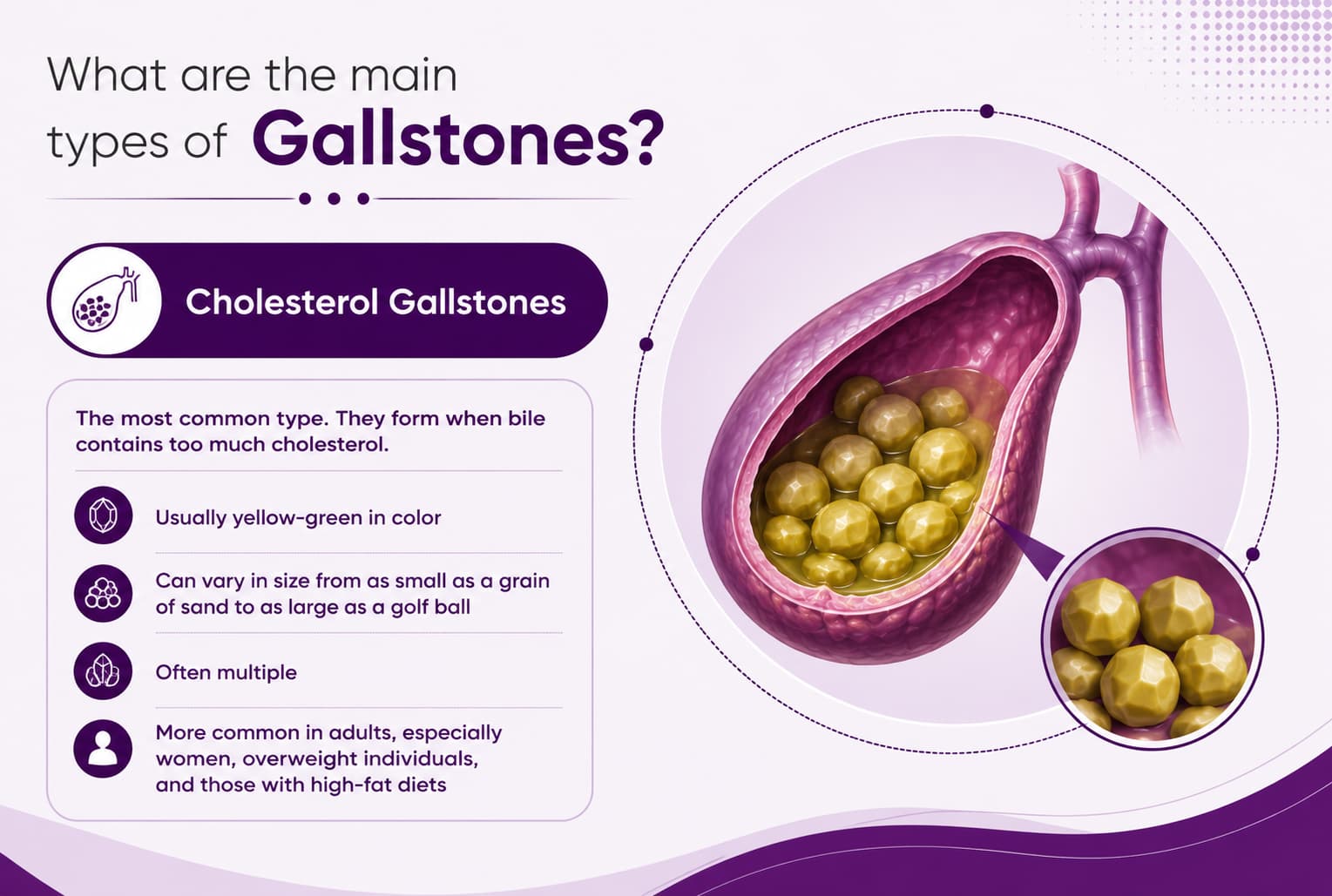
There are mainly two types of gallstones: cholesterol gallstones and pigment stones. Some people may also develop calcium carbonate stones, but they are rare. The type of stone depends on the composition of the bile.

Cholesterol Gallstones

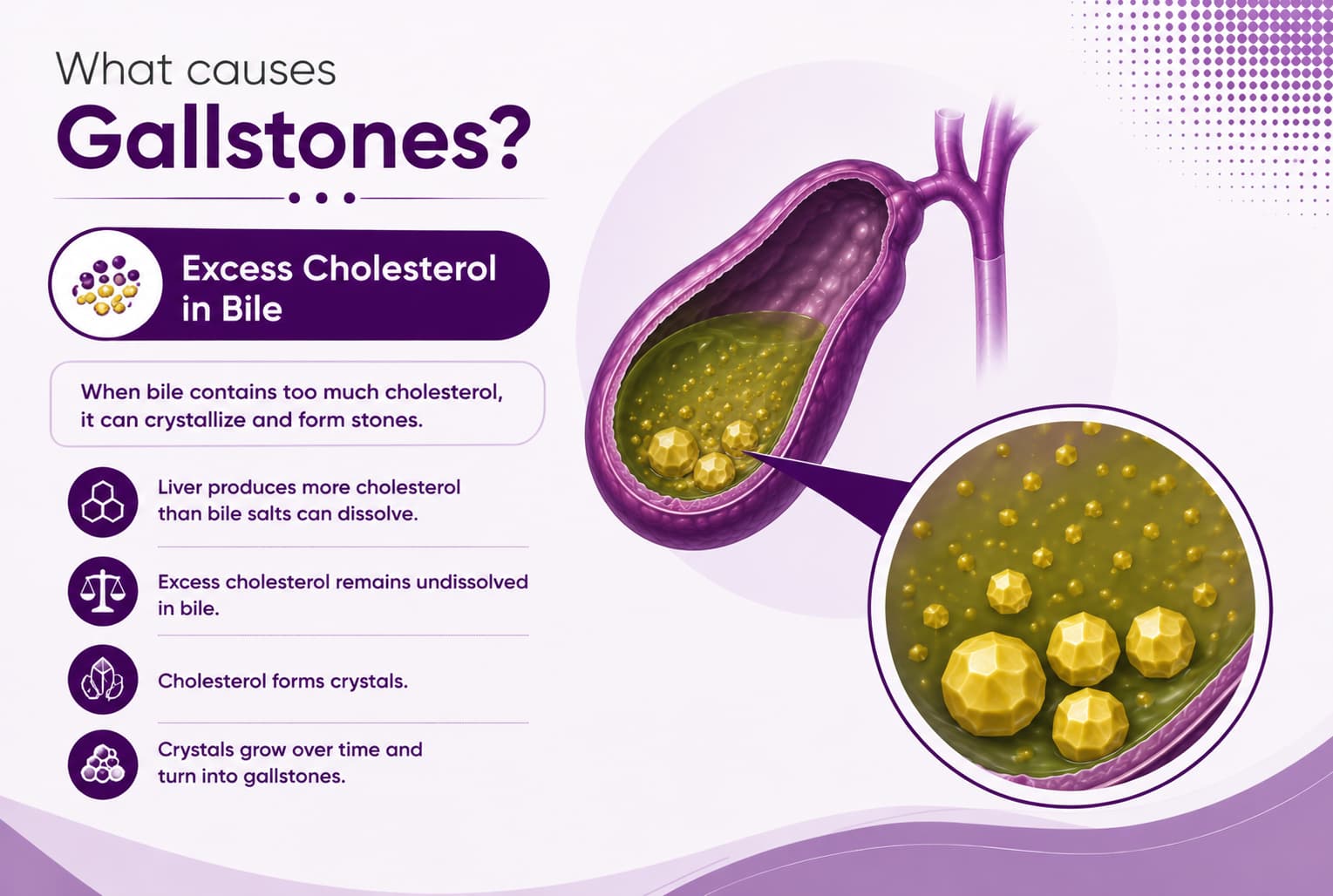
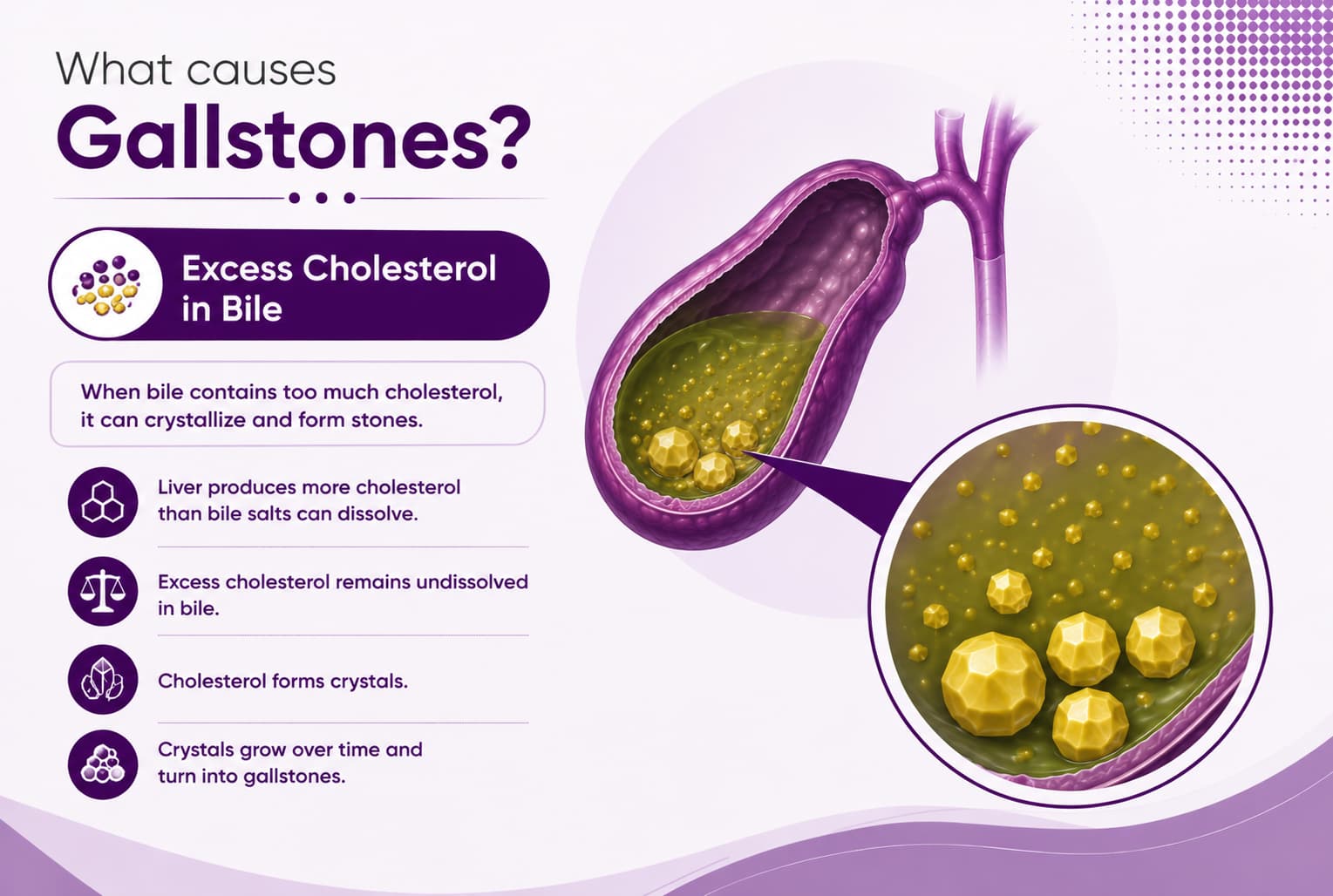
Cholesterol gallstones are the most common type of gallstone. They usually appear yellow or yellow-green and consist primarily of hardened cholesterol. Moreover, cholesterol normally remains dissolved in bile with the help of bile salts and phospholipids, but when there is an excess of cholesterol or a shortage of bile salts, the cholesterol can crystallize. Cholesterol stones may also form when the gallbladder does not empty. Hence, the bile remains inside the organ for a prolonged period, causing it to concentrate. obesity, rapid weight loss, high levels of triglycerides in the blood, and a diet can increase the risk of developing cholesterol stones.

Cholesterol Gallstones

Pigment stones

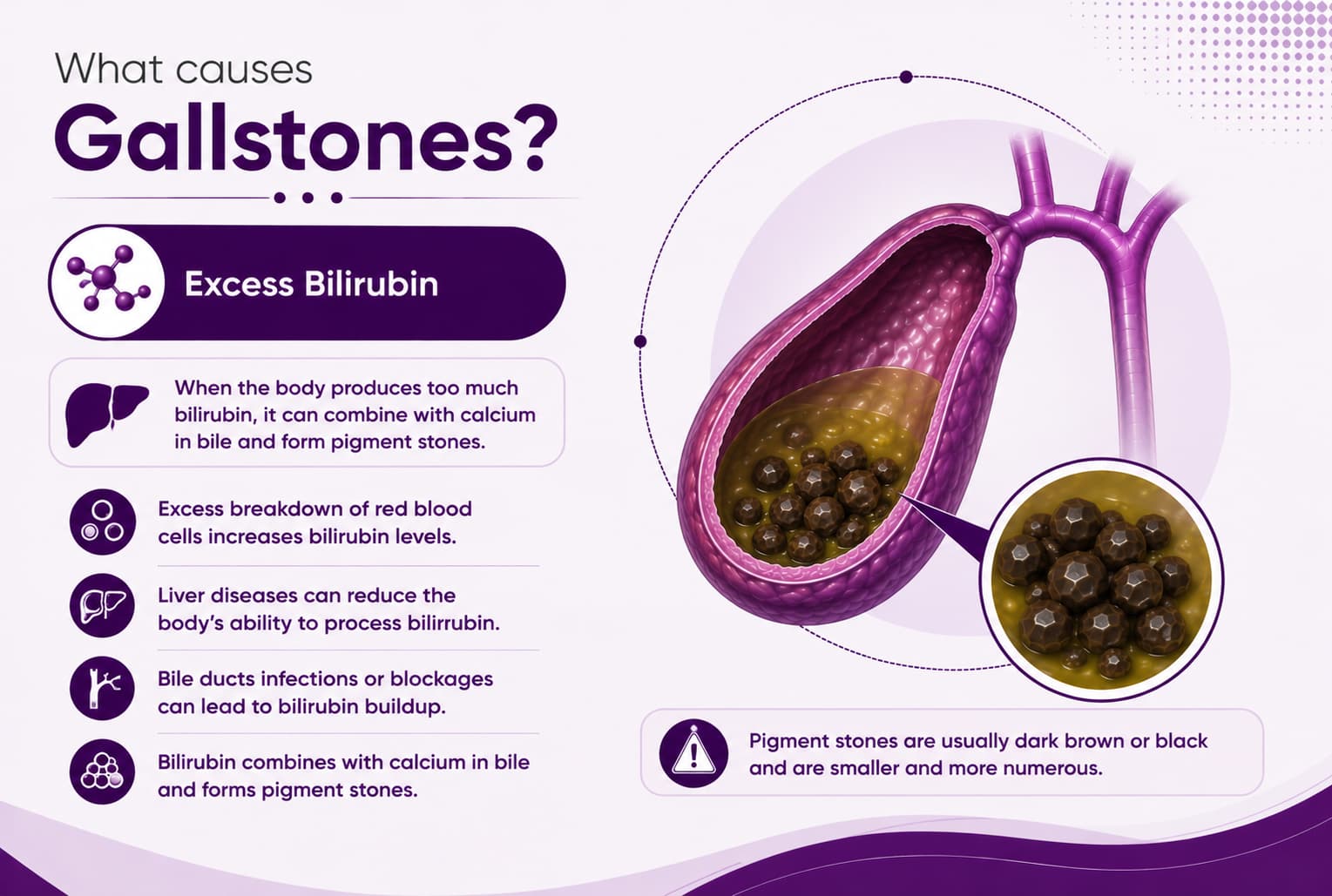
Pigment stones are less common than cholesterol stones and are either black or brown in color. They are made up of bilirubin, a waste product from the breakdown of red blood cells. The liver processes bilirubin and sends it to the gallbladder through bile, where it can build up and form stones. Pigment gallstones are more common in people with certain medical conditions, such as cirrhosis, biliary tract infections, or hereditary blood disorders like sickle cell anemia. Additionally, unlike cholesterol stones, pigment stones tend to form in the bile ducts rather than the gallbladder itself. They are not formed because of an excess of cholesterol. Therefore, treatments designed to dissolve cholesterol stones might not work for pigment stones.

Pigment stones

What causes Gallstones?

There is not even a single cause of gallstones, but several development factors can contribute to their formation

Excess Cholesterol in Bile

The liver removes cholesterol from the body by releasing it into bile. If bile contains more cholesterol than it can dissolve, the excess cholesterol may form crystals and eventually become stones.

Excess Cholesterol in Bile

Excess bilirubin

Some liver conditions can increase the production of bilirubin, which can lead to the formation of pigment stones.

Excess bilirubin

Poor Gallbladder Emptying

The ideal gallbladder should empty itself when it contracts and releases bile into the small intestine, but if it doesn’t, bile can become concentrated. The longer bile stays in the gallbladder, the higher the risk of stone formation increases.

Poor Gallbladder Emptying

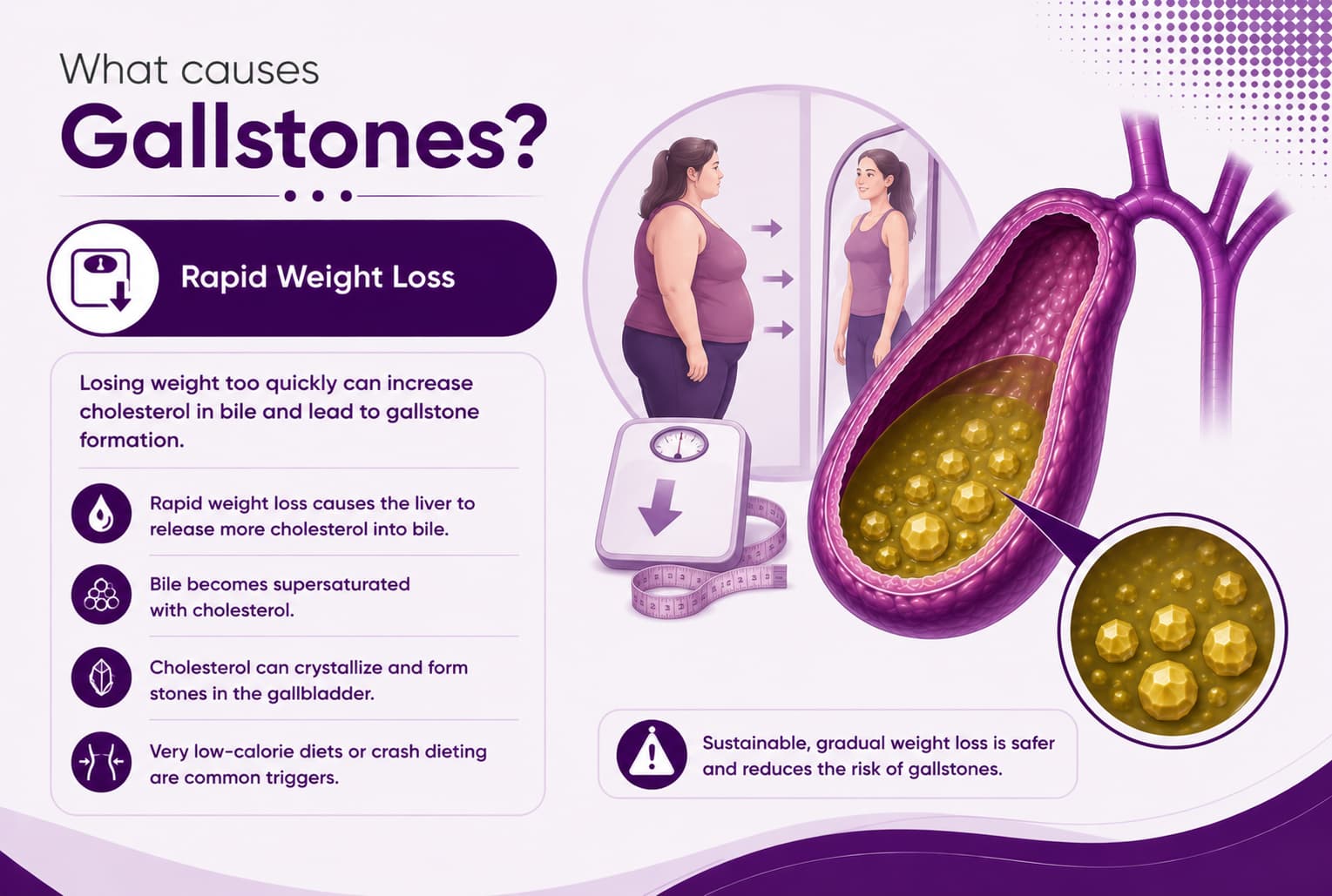
Rapid Weight Loss

Very rapid weight loss can cause the liver to secrete extra cholesterol into bile, which can overwhelm the gallbladder’s ability to dissolve it, leading to stone formation. Therefore, weight management and healthy eating habits can significantly reduce the risk of developing gallstones.

Rapid Weight Loss

Frequently Asked Questions

Gallstones can affect anyone, but certain factors increase the risk. Common risk factors include

  • Increasing age
  • Being overweight or obese
  • Rapid weight loss
  • Pregnancy
  • A family history of gallstones
  • Diabetes or metabolic disease
  • Certain liver conditions
  • Disorders that break down red blood cells
  • Long periods of fasting
  • Previous weight-loss surgery
  • Limited physical activity

Having one or more risk factors does not guarantee the development of gallstones, but it does increase the likelihood.

Gallbladder stones vary greatly in size and numbers. Some are as small as grains of sand, while others can grow to several centimeters in diameter A person may have

  • One large stone
  • Several medium-sized stones
  • Many tiny stones
  • A mixture of stones and biliary sludge

The size of the stone does not always predict the severity of the condition, but larger stones may be more likely to cause blockages.

A common myth is that gallstones can pass through the body like kidney stones, but this is generally not true due to the anatomy of the gallbladder and bile ducts. Therefore, a small stone can pass through the cystic duct into the common bile duct, but this is rare and often results in severe pain and complications. Hence, the movement of the stones is highly dependent on their size and location within the gallbladder. And it does not necessarily means relieve or a win situation for the patient.

Not every case can be prevented, but maintaining a balanced diet, regular exercise, and managing your weight can lower the risk of developing gallstones. Helpful steps include

  • Maintaining a healthy body weight
  • Losing weight gradually
  • Avoiding crash diets
  • Eating regular meals
  • Choosing fibre-rich foods
  • Staying physically active
  • Managing diabetes and other metabolic conditions

The measures may reduce risk, but they cannot guarantee prevention in all cases, especially for those with a genetic predisposition.